A Proud Tradition of Boarding History at St Patrick’s College Ballarat
When the Most Reverend James Moore was appointed Bishop of Ballarat in 1893, he was determined to establish a boarding school for boys. He envisioned serving families across the vast rural diocese, which stretched from Ballarat to the South Australian border and from Warrnambool on the Southern Ocean to Mildura on the Murray River.
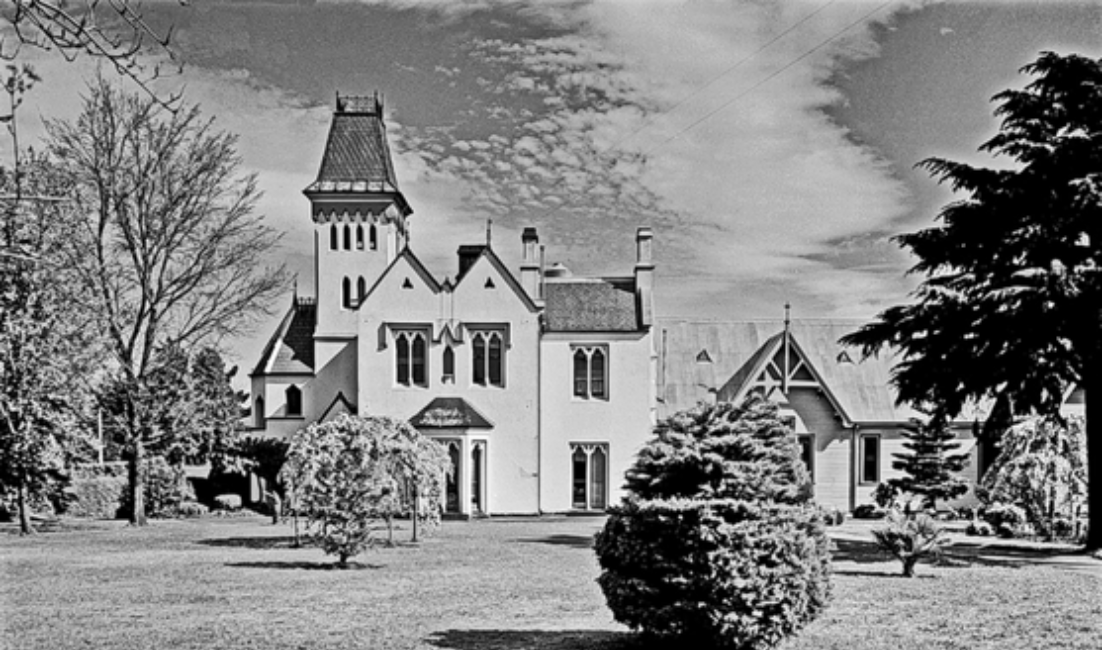
In 1887, Bishop Moore secured ownership of three and a half acres of land on Sturt Street, including the Gothic-style residence known as Tunbridge Folly, on the site where Kennedy House now stands.
In 1888, he travelled to Europe to recruit clergy and religious brothers for the proposed boarding school and returned with four Holy Ghost Fathers and four brothers from the same congregation.
The Fathers quickly established a weatherboard school and chapel alongside the Gothic residence, and the school formally opened on 9 February 1889.
Initially, the school showed great promise, with capable staff, modern facilities and a strong European-style curriculum. After the first year, however, serious difficulties emerged, especially when a key leader was recalled to Europe.
A combination of poor preparation, unclear leadership, conflict between the Director and the Bishop, disputes over fees and property ownership, harsh local conditions, illness, and the deaths of two priests in 1889 and 1891, together with frequent staff changes, gradually undermined the school. After Father Brennan died in 1891 at age 34, the situation became untenable, and the congregation withdrew from Australia in early 1892.
Although the venture ended abruptly and disappointingly, the outcome makes sense considering the isolation and hardships the community faced.
In December 1891, Bishop Moore urgently sought to preserve Holy Ghost College by asking the Christian Brothers to take over the school in return for the debt-free transfer of the college property, then valued at about £9,000.
Brother Treacy placed Bishop Moore’s proposal before his consultors, but the Christian Brothers could not reopen the college immediately without reinforcements from Ireland.
After further negotiations and delays, four Christian Brothers arrived in August 1892. The property was transferred, and the school was renamed St Patrick’s College, which opened in January 1893 under its founding principal, Rev. Brother J. L. Ryan, who had previous boarding-school experience at Gregory Terrace in Brisbane.
The Holy Ghost Fathers built the first boarding accommodation, a modest weatherboard building behind the chapel, in 1889. The U-shaped building comprised the western wing, known as St Patrick’s Dormitory until 1972; classrooms in the southern wing; and a refectory and kitchen in the eastern wing.
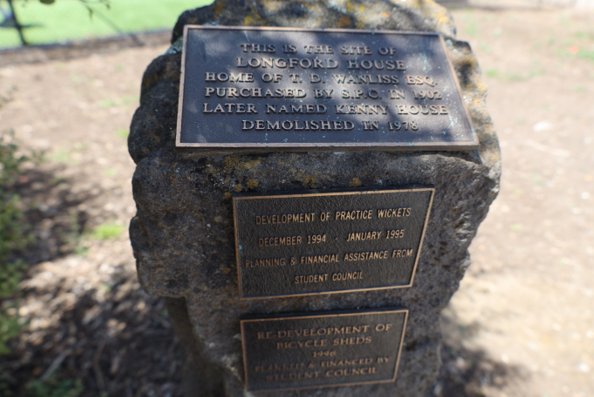
As boarding grew, the next purchase was Longford House, acquired in 1904; it accommodated about 30 boarders. Structural problems appear to have led to the removal of its second storey in 1916, after which it became known as Kenny House. From 1919 to 1920, it served as an infirmary and later as a community residence and staff quarters before being demolished in 1978. A stone marker memorial near O’Malley Sports Centre marks the site of Longford House, built in 1857.
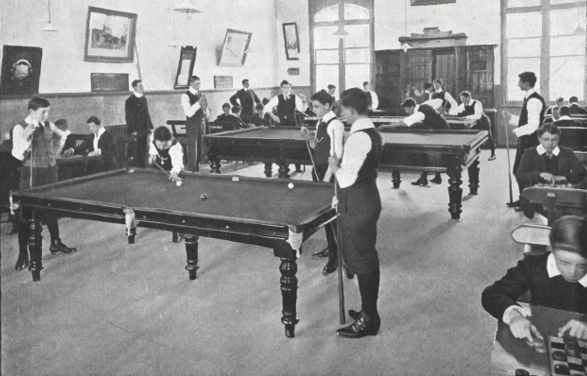
By 1919, boarding accommodation had again become inadequate, with enrolments around 250. The billiard room, formerly a handball court and now the Careers Hub, was repurposed, and the Sir Bernard Heinze Theatre also accommodated boarders. This disrupted the normal use of important College facilities and made the need for more suitable dormitory accommodation clear.
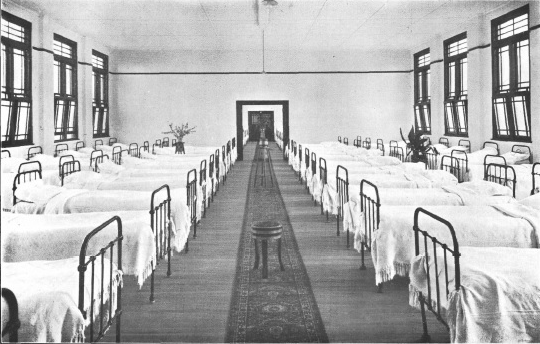
When Brother McCarthy arrived in July 1919, he quickly began construction of what became known as the McCarthy Wing, now the Healy Wing. By the end of that year, dressing rooms, lavatories, and two spacious dormitories had been completed. The new works provided ground-floor lavatories and dressing rooms and first-floor dormitories, costing £7,000. The building has since been repurposed: the upper floor now serves as the college library, and the lower level as classrooms with some staff offices.
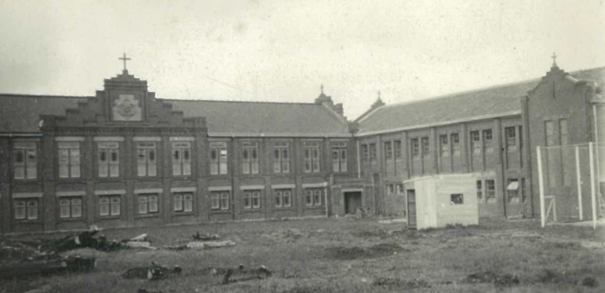
Between 1935 and 1939, the two boarding facilities became overcrowded, prompting plans to build a new dormitory wing and to name it in honour of Principal Brother D.G. Purton.
The new Purton wing included two large dormitories, three staff rooms, a shower block with fifty showers built from Ballarat glazed bricks, locker rooms and stainless-steel wash basins. The College could accommodate more than 230 boarders. Today, the Purton wing is mostly dedicated to classrooms, with some administrative staff rooms.
During WWII, boarding schools faced difficulties with shortages of domestic staff, food, and fuel. The College staff adjusted during this period, and management handled it well under the circumstances.
The College Annual, published in 1946, reports that Mr Cyril Kelly, Architect of Geelong, came to the College at the invitation of the Superior to design plans for additional dormitories and a new Chapel. Material costs were exorbitant, and tradespeople were unavailable. However, Br Healy considered it necessary to obtain permissions and to begin building as soon as conditions in the building trade returned to normal.
Mr Kelly drew up a fine block of buildings with a most imposing front, featuring Kennedy House, the new Chapel and a two-storey dormitory nestled in between. The dormitory received a permit in September 1948, but the Chapel did not. However, because the dormitory was to be sited where the old Chapel stood, the new Chapel had to be a priority. Because of financial constraints, the proposal omitted a dormitory for boarders, as well as the Chapel’s bell tower.
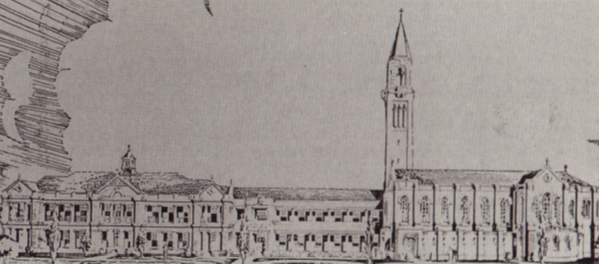
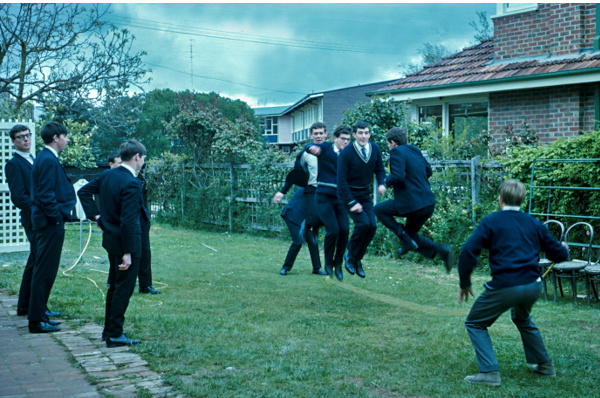
Between 1952 and 1982, the college increasingly favoured a shift from dormitory-style accommodation to a house, or unit-based system, intended to provide a more domestic environment with boarders under staff care.
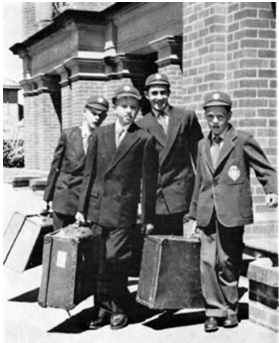
This shift in boarding philosophy influenced the acquisition of additional properties, several of which accommodated boarders at the time.
- McCann House (Dallata), purchased in 1952, became a boarding house for senior boys in 1953.
- McCunnie House was purchased in 1972.
- Leyton House, now known as Galvin House, was purchased in 2021. It had earlier been leased in the 1970s and used to accommodate senior boys.
- Wanliss House, also known as Kenny House, was purchased in 1974 and demolished in 2021 to make way for the Performing Arts Centre.
- Dimora (Nangle) House, purchased in 1982, was used for Year 12 boarders.
- Former residence of the Anglican Bishop, leased in 2012 and purchased in 2013. Sold in 2017.
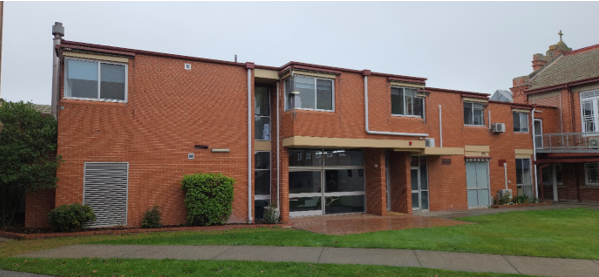
In 1977–78, a modern boarding house for 24 senior boys was built, with seven bedrooms, study facilities, and staff rooms. The ground floor had only basic food-preparation facilities. Before more funds became available to complete the lower level, the building was repurposed in 2002 for administrative use and, for the third time, renamed Kenny.
Boarding numbers continued to decline from an average intake of around 200 during the 1970s and 1980s, dropping significantly in the late 1990s and early 2000s to below 50 boarders.
In 1999, the College Board engaged external consultant Dr Kevin Burke to review boarding. His formal report, completed on 24 May 1999, was 120 pages. After considering the report and related advice from Board committees, the Board recommended to the Governing bodies that boarding be phased out by the end of 2002, citing prohibitive financial constraints.
The cost of constructing a new boarding facility was estimated at more than $2 million, a level of debt deemed unsustainable. Declining numbers of Catholic students across Victoria and Australia also cast doubt on long-term viability, and the Board concluded there was no strong economic case for continuing boarding in its existing form.
The proposal prompted strong opposition within the College community, leading to a vote of no confidence in the College Board and raising concerns about the process and transparency. Principal Brother Laurie Collins argued that terminating Boarding would be effectively irreversible.
In 2000, the College established a Residential Committee, chaired by Board member Peter Zala, to investigate creating a smaller boarding facility.
In June 2001, it was announced that the College Board had decided to build a boarding facility on college land for 30 boys, at an estimated cost of $700,000. The College would raise the funds, and the Shamrock Association, an incorporated body comprising committee members and parents, would lease the completed facility.
By 2002, Board members acknowledged Peter Zala’s vision, and the College retained boarding.
Brother Laurie Collins’s departure and Dr Peter Casey’s appointment in 2002 marked a renewed commitment to promoting and strengthening boarding.
In 2003, Mark Waddington, Director of Boarding, introduced a new boarding model. Twenty-five boarders lived in two houses: McCann House and Dimora (Nangle House).
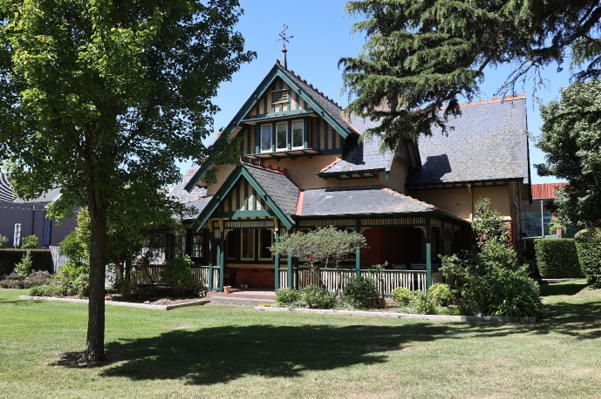
Over the next decade, boarding numbers grew. In 2012, the Buildings Committee secured a lease for 1416 Sturt Street, the former residence of the Anglican Bishop of Ballarat. The property accommodated 22 students and included a three-bedroom self-contained flat, along with considerably more recreational space than the McCann, Dimora, and Kenny houses.
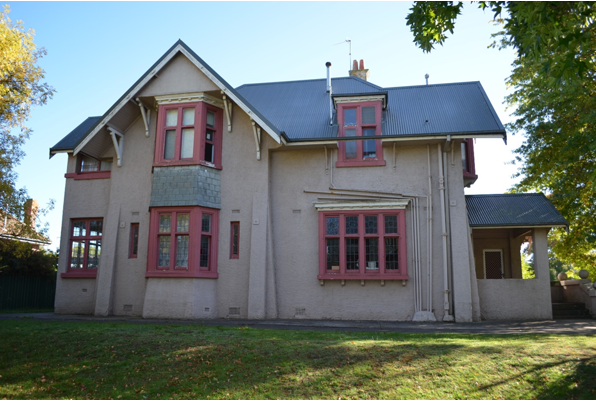
In 2013, the College received permission from Edmund Rice Education Australia to purchase 1416 Sturt Street. Sold in 2017.
During this period, Dr Peter Casey, then living in McCunnie House, moved, helping pave the way for further growth in boarding.
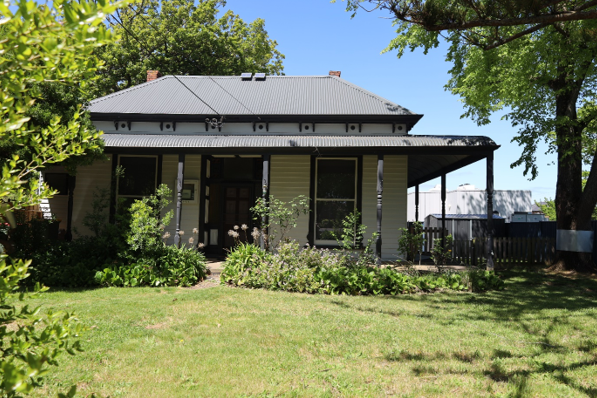
In 2015, the College Board announced that it would amend the Master Building Plan and prepare a budget for new boarding facilities anticipated for 2017. After approval from Edmund Rice Education Australia and the College Board, the College announced in 2016 construction of a state-of-the-art boarding precinct designed to accommodate up to 100 students, costing $3.9 million.
St Patrick’s College Old Collegians and the Foundation launched an appeal to help fund the new boarding facilities. The new boarding facilities would not have been possible without the generous donation from John Maxwell McArthur (SPC 1941-1944), a loyal SPC supporter who donated significantly to the Boarding Precinct appeal. The College honoured his generosity by naming the Dining Room after him.
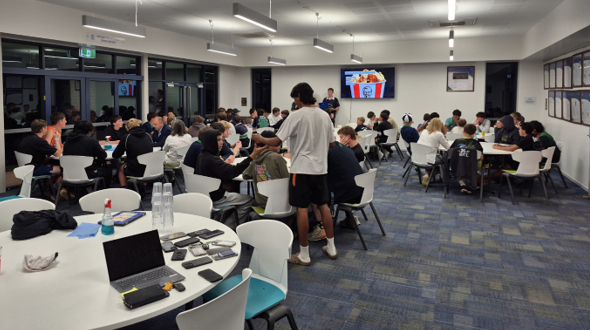
In 2018, the new three-storey boarding facility opened, providing accommodation for up to 80 boarders. Today, in 2026, the college houses 76 boarders from regional Victoria, interstate and overseas.
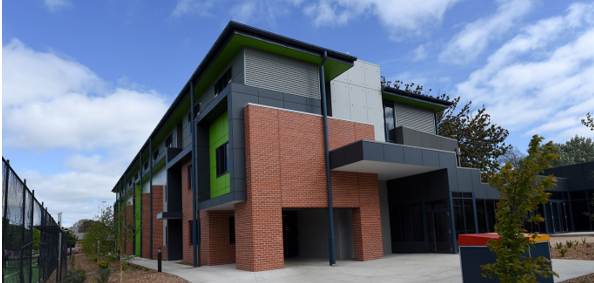
Boarding at St Patrick’s College has long been central to the school’s life and identity. From modest beginnings, it grew into a defining part of the College’s history, peaking in 1959 with more than 303 boarders, and continues today as an important expression of the College’s regional mission.