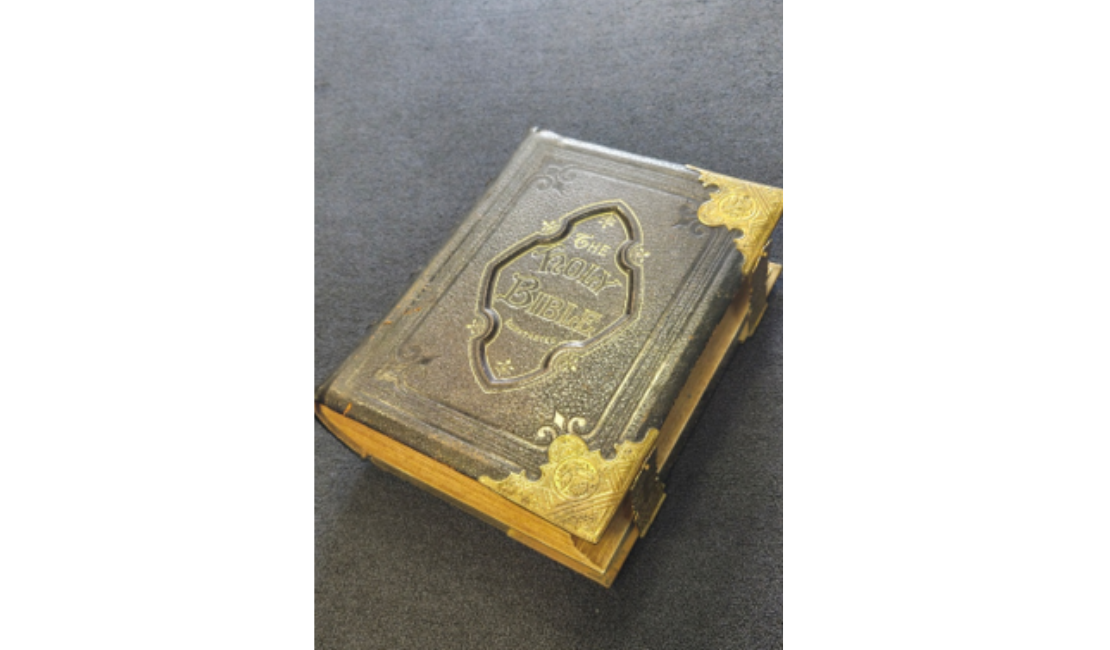
St Patrick’s College has acquired a remarkable piece of religious and social history: a substantial Victorian-era family Bible, published by John G. Murdoch of 41 Castle Street, Holborn, London, and generously donated by Stacey Blackmore, whose son, Baxter, is a student at the College.
The Bible offers a tangible link to nineteenth-century family life, faith, and publishing traditions. Murdoch also published similar editions in 1878. They are often described as The Holy Bible Illustrated or as editions incorporating the renowned biblical commentaries of Matthew Henry.
More Than a Religious Text
In Victorian Britain, a family Bible was far more than a book of Scripture. It was often the largest and most valuable volume in the household, occupying a place of honour. These impressive volumes served not only as sources of religious instruction and devotion but also as repositories of family history, recording births, marriages, and deaths across generations.
The donated Bible includes entries for the deaths of Joseph Fredrick Charles Thomas (August 22, 1902), John Anderson (June 7, 1928), and Catherine Thomas (January 7, 1929).
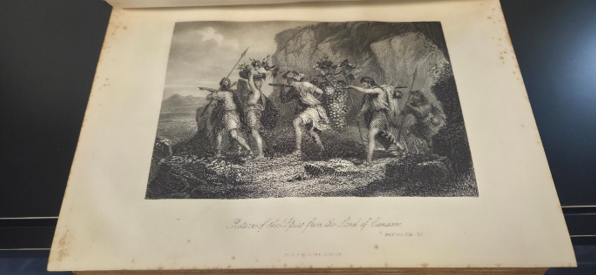
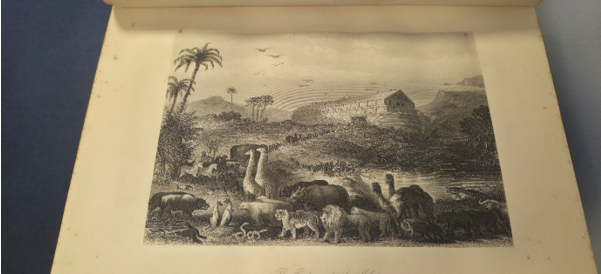
Many Victorian family Bibles were lavishly produced, featuring embossed leather bindings, gilt decoration, brass clasps, engraved illustrations, maps of the Holy Land, and extensive supplementary materials. These books were designed to be both practical and prestigious, reflecting faith’s central role in everyday life.
The Bible donated to St Patrick’s College retains its original brass clasps and contains handwritten entries in the family register. These features not only enhance its historical significance but also connect us personally with the families who treasured and preserved it for nearly 150 years.
The Influence of Matthew Henry
One distinguishing feature of many Murdoch family Bibles is the inclusion of material from Matthew Henry’s (1662-1714) work, one of the most influential biblical commentators in the English-speaking world. His monumental Commentary on the Whole Bible combined scriptural explanation with practical reflection and spiritual guidance.
Henry’s writings were immensely popular throughout the eighteenth and nineteenth centuries and remain widely consulted today. Including his commentary in family Bibles reflects the Victorian desire not only to read Scripture but also to understand and apply its teachings to daily life.
The Publisher Behind the Bible
John Murdoch, a London publisher active in the late Victorian period, published the Bible. Based at 41 Castle Street, Holborn, Murdoch produced a range of religious and literary works, including large-format family Bibles that combined biblical texts with commentary, illustrations, and educational materials. Surviving examples bearing the imprint “John G. Murdoch, 41 Castle Street, Holborn, London” remain sought after by collectors and historians.
Murdoch’s publications were part of a flourishing nineteenth-century market for illustrated family Bibles. These volumes reflected advances in printing technology and rising literacy, making religious and educational resources more accessible to households throughout Britain and the wider English-speaking world.
A Window into Victorian Society
This Bible’s significance extends beyond its religious content. It offers valuable insights into Victorian culture, domestic life, and the role of faith within the family. Its craftsmanship reflects the high standards of nineteenth-century book production, and the family register makes it a unique historical document.
For archivists and historians, such records can provide important evidence for genealogical and local history research. The handwritten entries preserved in the Bible help tell the story of its owners and users, making it both a family heirloom and a historical artefact.
Preserving a Legacy
Donating this Bible to St Patrick’s College adds an important piece to the College’s historical collection. As both a religious text and a cultural artefact, it illustrates the enduring importance of faith, learning, and family memory in the nineteenth century.
Through the Blackmore family’s generosity, this remarkable volume has been preserved for future generations. It now reminds us not only of the craftsmanship of Victorian publishers and bookbinders but also of the families who turned to its pages for guidance and inspiration, and for recording life’s most significant moments.